Showing posts with label spring. Show all posts
0

History of Ostara

Many Holidays, Many Names:

The word Ostara is just one of the names applied to the celebration of the spring equinox on March 21. The Venerable Bede said the origin of the word is actually from Eostre, a Germanic goddess of spring. Of course, it's also the same time as the Christian Easter celebration, and in the Jewish faith, Passover takes place as well. For early Pagans in the Germanic countries, this was a time to celebrate planting and the new crop season. Typically, the Celtic peoples did not celebrate Ostara as a holiday, although they were in tune with the changing of the seasons.
A New Day Begins:
 
A dynasty of Persian kings known as the Achaemenians celebrated the spring equinox with the festival of No Ruz -- which means "new day." It is a celebration of hope and renewal still observed today in many Persian countries, and has its roots in Zoroastrianism. In Iran, a festival called Chahar-Shanbeh Suri takes place right before No Ruz begins, and people purify their homes and leap over fires to welcome the 13-day celebration of No Ruz.
Mad as a March Hare:
 
Spring equinox is a time for fertility and sowing seeds, and so nature's fertility goes a little crazy. In medieval societies in Europe, the March hare was viewed as a major fertility symbol -- this is a species of rabbit that is nocturnal most of the year, but in March when mating season begins, there are bunnies everywhere all day long. The female of the species is superfecund and can conceive a second litter while still pregnant with a first. As if that wasn't enough, the males tend to get frustrated when rebuffed by their mates, and bounce around erratically when discouraged.
The Legends of Mithras:
 
The story of the Roman god, Mithras, is similar to the tale of Jesus Christ and his resurrection. Born at the winter solstice and resurrected in the spring, Mithras helped his followers ascend to the realm of light after death. In one legend, Mithras, who was popular amongst members of the Roman military, was ordered by the Sun to sacrifice a white bull. He reluctantly obeyed, but at the moment when his knife entered the creature's body, a miracle took place. The bull turned into the moon, and Mithras' cloak became the night sky. Where the bull's blood fell flowers grew, and stalks of grain sprouted from its tail.
Spring Celebrations Around the World:
 
In ancient Rome, the followers of Cybele believed that their goddess had a consort who was born via a virgin birth. His name was Attis, and he died and was resurrected each year during the time of the vernal equinox on the Julian Calendar (between March 22 and March 25). Around the same time, the Germanic tribes honored a lunar goddess known as Ostara, who mated with a fertility god around this time of year, and then gave birth nine months later – at Yule.

The indigenous Mayan people in Central American have celebrated a spring equinox festival for ten centuries. As the sun sets on the day of the equinox on the great ceremonial pyramid, El Castillo, Mexico, its "western face...is bathed in the late afternoon sunlight. The lengthening shadows appear to run from the top of the pyramid's northern staircase to the bottom, giving the illusion of a diamond-backed snake in descent." This has been called "The Return of the Sun Serpent" since ancient times.

According to the Venerable Bede, Eostre was the Saxon version of the Germanic goddess Ostara. Her feast day was held on the full moon following the vernal equinox -- almost the identical calculation as for the Christian Easter in the west. There is very little documented evidence to prove this, but one popular legend is that Eostre found a bird, wounded, on the ground late in winter. To save its life, she transformed it into a hare. But "the transformation was not a complete one. The bird took the appearance of a hare but retained the ability to lay eggs...the hare would decorate these eggs and leave them as gifts to Eostre."

Modern Celebrations

This is a good time of year to start your seedlings. If you grow an herb garden, start getting the soil ready for late spring plantings. Celebrate the balance of light and dark as the sun begins to tip the scales, and the return of new growth is near.

Many modern Wiccans and Pagans celebrate Ostara as a time of renewal and rebirth. Take some time to celebrate the new life that surrounds you in nature -- walk in park, lay in the grass, hike through a forest. As you do so, observe all the new things beginning around you -- plants, flowers, insects, birds. Meditate upon the ever-moving Wheel of the Year, and celebrate the change of seasons.

SOURCE
about.com
0

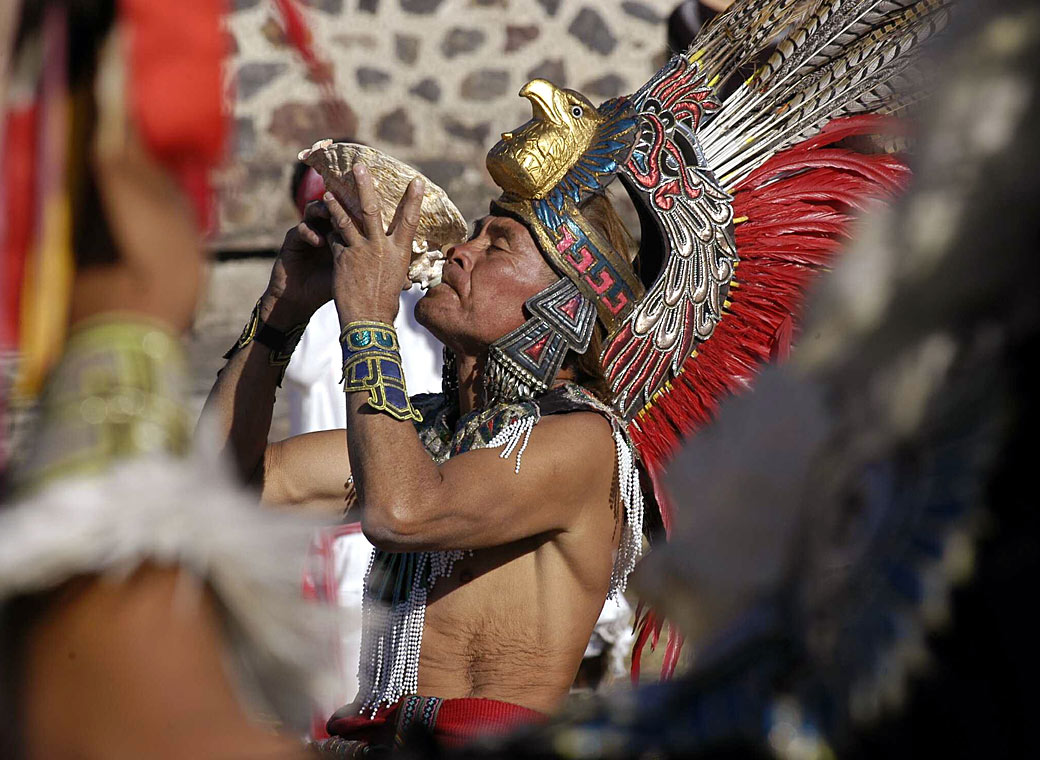
Welcome, Oh Great Quetzaltcoatl

From the heavens you descend. Welcome, oh great one! Let your energy fill us, purify us and reconnect us with the spirit of our Mother. Winter has been cold and harsh, but your energy will fill us for another season; your light will vanquish the darkness and your power will protect us from all that is evil.

Touch our mother's womb, and bring forth the abundance from which she nourishes us, and feeds us, and protects us. Release us from the negative energies that we have carried and bring us hope for a better tomorrow.

Enlighten us. Fill us with your wisdom. Fill us with your love and protection. Our father, our lord. Feathered snake that descends from the heavens and carries with him the part of our soul that is reborn each cycle. Mighty warrior who protects his children who were made from the same sacred corn as he long ago by the four winds -- listen... listen to the sound of the caracol, rising sounds through the winds.

A new cycle has begun. The Feathered Snake has returned home.


1

Deities of the Spring Equinox

by Patti Wigington
About.com


Spring is a time of great celebration in many cultures. It's the time of year when the planting begins, people begin to once more enjoy the fresh air, and we can reconnect with the earth again after the long, cold winter. A number of different gods and goddesses from different pantheons are connected with the themes of Spring and Ostara.
 
Asasa Ya (Ashanti)
This earth mother goddess prepares to bring forth new life in the spring, and the Ashanti people honor her at the festival of Durbar, alongside Nyame, the sky god who brings rain to the fields.


Cybele (Roman)
This mother goddess of Rome was at the center of a rather bloody Phrygian cult, in which eunuch priests performed mysterious rites in her honor. Her lover was Attis (he was also her grandson, but that's another story), and her jealousy caused him to castrate and kill himself. His blood was the source of the first violets, and divine intervention allowed Attis to be resurrected by Cybele, with some help from Zeus. In some areas, there is still an annual three-day celebration of Attis' rebirth and Cybele's power.


Eostre (western Germanic):  
Little is known about the worship of this Teutonic spring goddess, but she is mentioned by the Venerable Bede, who said that Eostre's following had died out by the time he compiled his writings in the eighth century. Jacob Grimm referred to her by the High German equivalent, Ostara, in his 1835 manuscript, Deutsche Mythologie. Eostre's name is the root of our present day spring celebration of Ostara.


Flora (Roman)
This goddess of spring and flowers had her own festival, Floralia, which was celebrated every year between April 28 to May 3. Romans dressed in bright robes and floral wreaths, and attended theater performances and outdoor shows. Offerings of milk and honey were made to the goddess.


Freya (Norse)
This fertility goddess abandons the earth during the cold months, but returns in the spring to restore nature's beauty. She wears a magnificent necklace called Brisingamen, which represents the fire of the sun.


Osiris (Egyptian)
This lover of Isis dies and is reborn in a resurrection story. The resurrection theme is popular among spring deities, and is also found in the stories of Adonis, Mithras and Attis as well.


Saraswati (Hindu)
This Hindu goddess of the arts, wisdom and learning has her own festival each spring in India, called Saraswati Puja. She is honored with prayers and music, and is usually depicted holding lotus blossoms and the sacred Vedas.
Anterior Inicio

Darkness Rises

Wicca's Greatest Sites